


Why Choose Us
Professional team
The workforce is stable and has many years of production and sales experience. It is a provider with a strong guarantee of quality products and services.
Qualifications and certifications
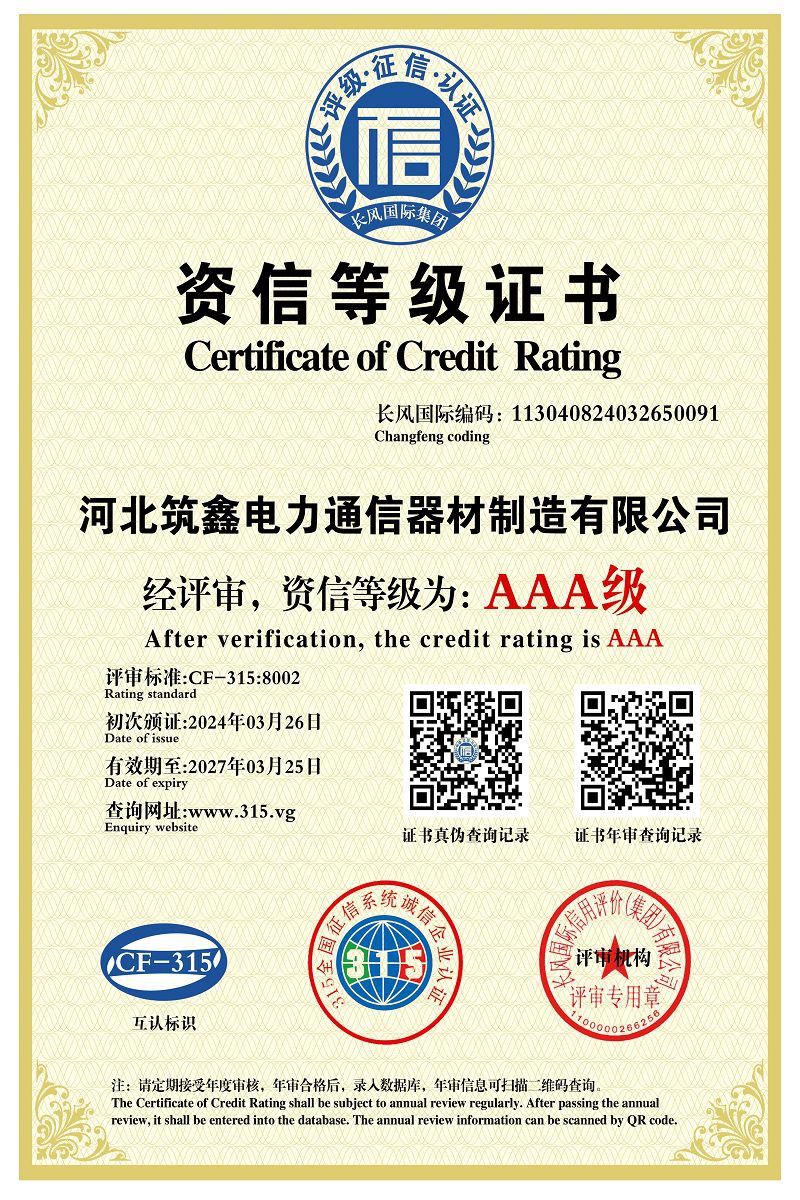
ISO certification, AAA quality, honor, honest enterprise, leading standard parts enterprise, high-quality supplier of state-owned enterprises, etc.
Customized services
Our team of experts will work closely with you to understand your needs and will provide solutions that are tailored to meet your expectations.
7x24 hours delivery
You can contact us anytime via email/phone to resolve any issues.
Shackle is a kind of mechanical equipment, mainly used in machinery, metallurgy, electric power, railroad, water conservancy, port, dock, paper, chemical industry and other industries for lifting and hoisting heavy objects or equipment. It is also known as connecting ring, which is a commonly used connecting equipment in mechanical engineering, in various forms, such as European large bow type unloading buckle, European large DEE unloading buckle, round head unloading buckle, square head unloading buckle, D shaped unloading buckle and so on.
Advantages of Shackle
● Integral casting, strong and durable.
● U-shape design, strong load bearing, not easy to be damaged.
● Easy to dismantle, high load bearing tension, even force on rotating threads.
● High-strength alloy steel material, solid structure, prevent rust and oxidation.
● Galvanized surface, precision oil pressure, smooth surface without burrs, higher strength.
Before operation, check whether the type of buckles used is matched, whether the connection is firm and reliable, and the rated load of buckles, prohibit the use of overloading.
Prohibit the use of bolts or metal rods instead of pins, and do not allow large impacts or collisions during lifting, and lift smoothly.
The pin should rotate flexibly in the lifting hole without any jamming phenomenon, and the pin must be inserted with a good safety pin.
The body of the shackle shall not bear lateral bending moment, that is, the bearing capacity shall be in the plane of the body, and the maximum angle between the two legs of the rigging carried by the shackle shall not be more than 120 degrees.
When using the shackle to correctly support the load, that is, the force should be along the centerline of the shackle, to avoid bending, unstable load, not to mention overloading, but also to avoid the eccentric load of the shackle.
When the shackle is used with the wire rope rigging, the cross pin part of the shackle should be connected with the rope eye of the wire rope rigging, so as to avoid the friction between the wire rope and the shackle when the rigging is lifting up, resulting in the detachment of the cross pin from the shackle body.
According to the frequency of use, the working conditions of the degree of bad conditions should be determined by a reasonable periodic inspection, the periodic inspection cycle should not be less than half a year, the longest not more than one year, and should make a good inspection record.

There are two main types of shackles: bolt-type shackles and screw-pin shackles.
● Bolt-type shackles have a U-shaped body with a bolt through the center. The bolt is secured with a nut. Bolt-type shackles are the most common type of shackle. They are easy to use and available in a wide variety of sizes and strengths.
● Screw-pin shackles have a U-shaped body with a screw pin that passes through the body and a hole in the pin. The screw pin is secured with a washer and a nut. Screw-pin shackles are more secure than bolt-type shackles but are also more challenging to use.
Factors to Consider When Choosing a Shackle
Load capacity
The shackle must be able to support the weight of the load.
Type of load
The shackle must be compatible with the type of load. For example, a chain shackle should not be used to tow a vehicle.
Environment
The shackle must withstand the environment in which it will be used. For example, a shackle used in a marine environment must be made of stainless steel.
Price
Shackles can range from a few dollars to hundreds of dollars. It is vital to choose a shackle that fits your budget.
When using shackles, it is essential to follow these safety tips:
● Always inspect the shackle before each use. Look for any signs of damage, such as cracks, bends, or corrosion.
● Do not overload the shackle. The shackle must be able to support the weight of the load.
● Use the correct type of shackle for the application. For example, a chain shackle should not be used to tow a vehicle.
● Use the correct size shackle for the application. The shackle must be large enough to fit the load.
● Secure the shackle properly. The shackle must be secured to prevent it from coming loose.
● Do not use a shackle that has been damaged. A damaged shackle is not safe to use.

Both shackles and clevises are U-shaped mechanical coupling devices that are usually closed by some type of fastener, whether a bolt or a threaded pin. In most cases, these U-shaped pieces are used to facilitate attaching a chain, a rope, or a wire rope for rigging purposes, hoisting, or towing applications.
Both shackles and clevises are designed in varying levels of working load limit (WLL), with various types of pins, and in various styles, and contrary to popular belief, their size is specified by the diameter of the shackle or clevis body, and not by the diameter of the threaded bolt, or a clevis fastener.
However, their main difference is mostly in their working load limit and certain nuances in their design, which also dictate their overall application. You’ll find those differences below.
The Difference Between the Shackle and a Clevis Fastener
The main difference is in the working load limit and their applications; clevises are mostly used in farming towing applications, with shackles typically used in construction, lifting, and rigging.
Clevises are most typically constructed to allow a reasonable amount of vertical movement and an appreciable amount of horizontal or lateral movement, mostly associated with towing applications in farming and sailboat rigging.
Additionally, these types of fasteners are typically closed with a non-threaded clevis pin for easier uncoupling of farming equipment in towing applications. However, it’s worth noting that they might be used in conjunction with a cotter pin that would prevent the clevis pin’s accidental removal due to vibrations.
On the other hand, shackles are mostly used in rigging and lifting, as they’re made of stronger materials, such as alloy or stainless steel. Additionally, they’re usually secured via a threaded pin or a threaded bolt, which makes them suitable for overhead lifting. There are two different types of shackles:
● Anchor Shackles — Also known as bow shackles, these have a generously-sized O-shaped loop that’s better suited for multipoint connection.
● Chain Shackles — More commonly known as D-shackle, these are shaped like a chain link and are thus narrower than typical anchor shackles. Their design reduces the rigging line movement, as they’re designed to primarily take the load in-line.
Different Pin Types
While clevises are primarily fastened via a non-threaded clevis pin and shackles via a threaded bolt, pin types are interchangeable in most cases. Here are three different types of pins:
● Screw Type — These pins allow rapid securing of the shackle or a threaded clevis by applying torque.
● Pin Types — These are straightforward to install and remove for the shackle or a clevis, which limits their use due to them being susceptible to disengagement.
● Nut, Bolt, and Cotter Pin Type — This is the most secure type of fastening a shackle or a clevis since the nut secures the bolt, and the cotter pin prevents the nut from unfastening due to excessive vibration. These excel at withstanding radial and torsional loads, but their complex installing and removal process makes them more suitable for semi-permanent applications.
The Parts of a Shackle
Bow
The curved portion of the shackle body opposite the pin—often referred to as the bail, body, dee, or bowl
Ears
Portion of the shackle body that support the shackle pin
Pin
A steel bolt made to span the two shackle ears
Shoulder
The part of the pin that makes contact against the ear when the pin is fully threaded or engaged
Carbon steel shackles
Design Factor of 6:1. More ductile than alloy. Available in round pin, screw pin, bolt type.
Alloy steel shackles
Design Factor of 5:1. Stronger than carbon steel. Can achieve an equivalent WLL as carbon shackles in a smaller product design. Available in round pin, screw pin, bolt type.
Galvanized shackles
The galvanization process adds a thin layer of zinc oxide to protect against rust and corrosion. Galvanized shackles can be used in industrial applications where moisture isn’t a primary concern, but where the shackles still need to be protected against elements that may cause accelerated corrosion or deterioration to the product.
Stainless steel shackles
Stainless steel shackles provide the greatest corrosion resistance and are ideal for marine applications. Varying grades of stainless steel can be used to protect the shackle against salt water or chemical environments. Shackles made from stainless steel are typically more expensive than galvanized shackles.
What Are the Different Types of Shackles?
Shackle bow types: Anchor shackles vs. Chain shackles
The shape of the shackle’s body, or bow, is a major determination in the style of the shackle and how it can be used.
● Anchor shackles / bow shackles
The terms anchor shackles and bow shackles are both used interchangeably and refer to a type of shackle with a larger, round “O” shaped bow. A larger bow shape allows these types of shackles to be side loaded or used in multiple sling-leg connections.
Anchor shackles can be used for side pulling when you factor in the reduction to the WLL based on the angle deviation from in-line (0°)—which we will discuss in more detail later in this article.
● Chain shackles / d shackles
Chain shackles, also referred to as D shackles, have a D-shaped bow that is narrower than anchor shackles. Because these shackles are designed and rated for in-line tension, they should not be side loaded, as side loading can twist or bend the bow of the shackle.
When using a chain shackle, the center line of the load should always coincide with the center line of the shackle when in use.
Shackle pin types: Screw pin vs. Bolt type vs. Round pin
Careful consideration must be given to the type of shackle pin that is used for your application. Some types of pins are designed to be used for overhead lifting, and other types are not. Some pins are ideal for “pick and lift” scenarios and can be quickly connected and disconnected, while others are more ideal for semi-permanent applications.
● Screw pin shackles
On a screw pin shackle, a threaded pin is inserted through the ears and tightened down. Screw pin shackles are quick and easy to connect and disconnect so they’re convenient for rigging that is used for “pick and place” applications or when slings and other hardware are often changed out. Screw pin shackles are not recommended for permanent or long-term installations.
Screw pin shackles can be used in applications where side loading is present, and with multi-leg sling assemblies. However, reduction to the WLL must be accounted for when used in a side-loading situation.
Be aware that a live line, such as a sling being used in a choker hitch configuration, can cause the screw pin to be rotated, torqued, or twisted which can cause the pin to unthread itself. Always tighten the pin prior to each lift.
To avoid the pin from rotating or loosening due to vibration, mousing can be used as a secondary method of securement. Loop annealed iron wire through the hole in the collar of the pin and around the adjacent leg of the shackle—securely twisting both ends together.
When using a screw pin shackle, the screw pin threads shall be fully engaged, tight, and the shoulder should be in contact with the shackle body.
● Bolt type shackle
A bolt type shackle is a more secure version used in rigging that features the combination of a bolt and nut located alongside a cotter pin. Bolt type shackles can be used in any application that uses a round pin or a screw pin. These types of shackles remain secure even when the shackle is subjected to rotation or torque.
Bolt type shackles are practical in many rigging applications where the anchor bolt is expected to experience some rotation. The tightening nut and the cotter pin eliminate the need to tighten the pin prior to every lift or movement of a load, so bolt type shackles are excellent choices for semi-permanent or long-term installations, or where the load may slide on the shackle pin causing it to rotate.
● Round pin shackles
Round pin shackles consist of a round unthreaded pin that is secured in place with a cotter pin. These perform well in applications where the pin may be subjected to torque or twisting.
They’re most popular in tie-down, towing, suspension, or applications where the load is strictly applied in-line. A cotter pin is used to secure the shackle pin in place.
However, round pin shackles are not recommended for overhead lifting applications. Round pin shackles shouldn’t be used as a collector ring in rigging applications where multiple sling legs are present, or where side loading may occur.
Specialty Types of Shackles
Synthetic sling shackles
On a synthetic sling shackle, the bow of the shackle is widened to increase synthetic web sling or synthetic roundsling efficiency. This design allows for 100% of the sling’s WLL to be achieved by preventing the slings from pinching or bunching, which can damage the slings or reduce their rated capacity.
Synthetic sling shackles are available in screw pin or bolt type design.
Wide body shackles
Used in conjunction with high capacity synthetic web slings, synthetic roundsling, or wire rope slings. When using a shackle with wire rope, the shackle must be equal or greater than the wire rope diameter. The increased radius of the shackle bow provides:
An increase in surface area for a better D/d ratio
Improved service life of the sling
Eliminates need for a thimble eye
Prevents kinking and bunching of the sling around the bow
Long reach shackles
These long reach shackles are ideal for use in construction applications where a longer reach is needed to attach to pick points. They can also be used as a bail for lifting thicker products.
Sheet pile shackles
Just what their name implies, they’re designed specifically for pulling sheet piling. These types of shackles are equipped with an easy opening pin that will not detach and become lost.
Our factory
Hebei Zhuxin Electric Power Communication Equipment Manufacturing Co., Ltd. was established on May 30, 2013. The registered capital of the company is 98 million, with a construction area of more than 100,000 square meters, a modern factory building, advanced production lines, and complete testing equipment. We have been a high-quality supplier to many domestic and foreign trade companies. We can also provide a high-quality customization service.
ur company integrates processing and manufacturing. It has one-stop production lines for cold and hot forming, stamping heat treatment, welding, laser cutting, surface treatment, inspection, and packaging.; the annual consumption of raw materials is 32,000 tons; it has more than 80 sets of various advanced machinery and equipment; and it has an experienced management and technical team. The company has about 200 employees.


Certificate





FAQ