

Stay Rod

Why Choose Us
Professional team
The workforce is stable and has many years of production and sales experience. It is a provider with a strong guarantee of quality products and services.
Qualifications and certifications
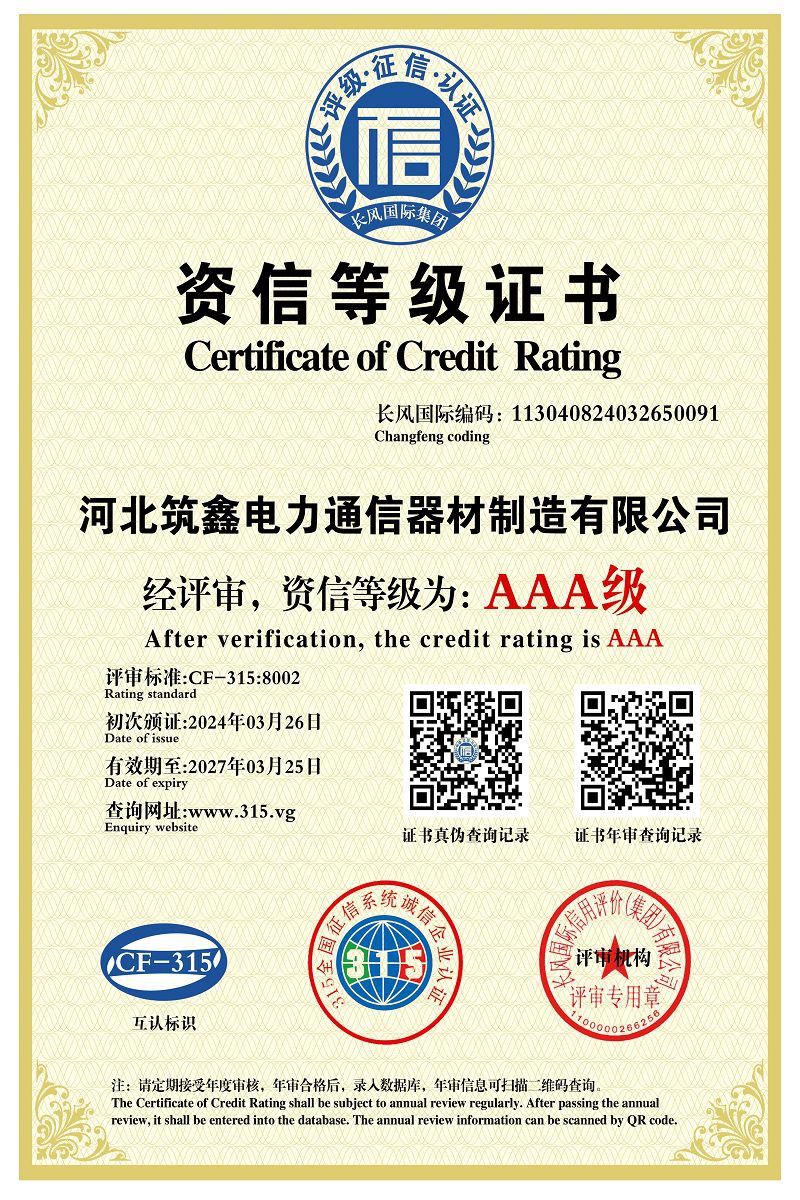
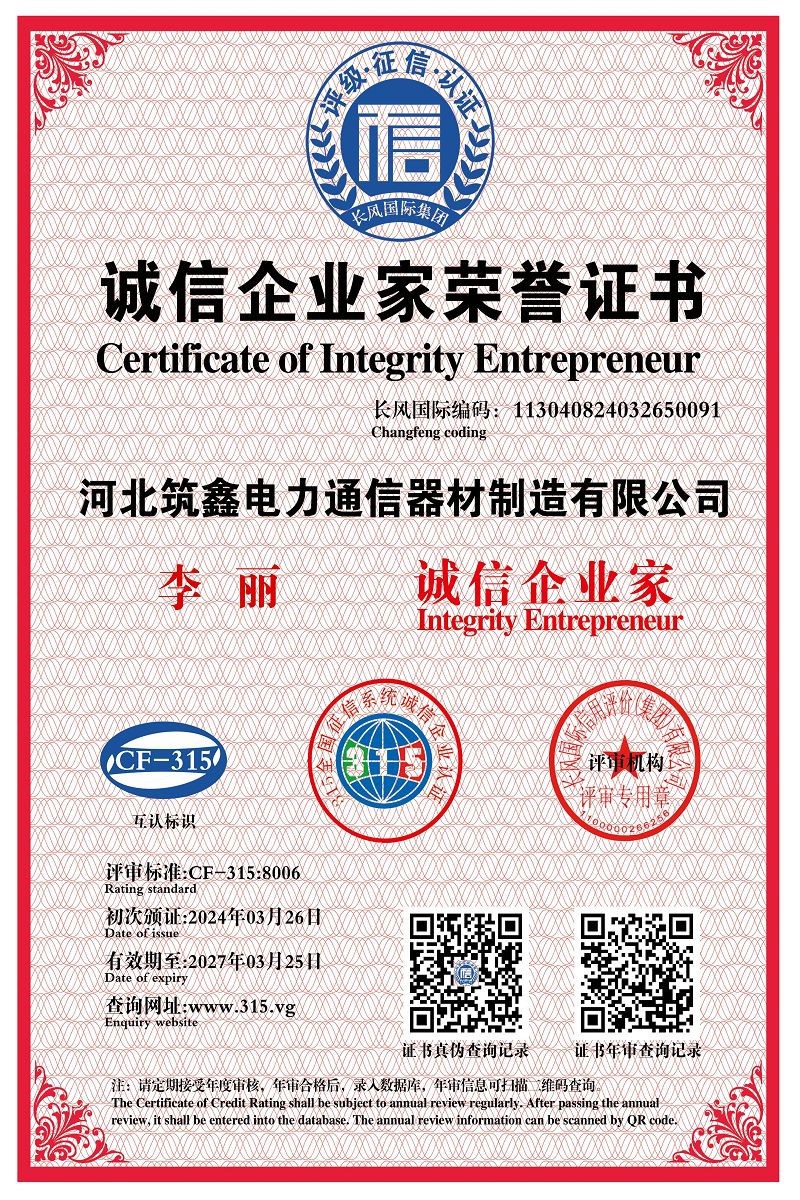
ISO certification, AAA quality, honor, honest enterprise, leading standard parts enterprise, high-quality supplier of state-owned enterprises, etc.
Customized services
Our team of experts will work closely with you to understand your needs and will provide solutions that are tailored to meet your expectations.
7x24 hours delivery
You can contact us anytime via email/phone to resolve any issues.
The stay rod, also known as the cable stay rod, is a metal product that has a ring-shaped structure that can be fixed in the middle of the cable through threading or clamping, thereby connecting two sections of cable and extending its length. This structure makes the stay rod very useful in scenarios where the length of the cable needs to be increased. It should be noted that the specifications and size of the stay rod can be customized according to actual needs to meet the needs of different application scenarios. At the same time, when using an stay rod, you should ensure that it is installed and fixed correctly to ensure its stability and safety. The stay rod is a practical metal product that is widely used in various occasions where the length of the pull cord needs to be extended.
The main function of the stay rod is reflected in many aspects. It can fix the backup cable clamp on the power equipment, especially in power maintenance. It can be used for the maintenance and installation of solar modules, high-voltage lines, communication lines and other equipment. Extend the use range of tools from the ground to high altitude, thereby saving man-hours and labor and improving construction safety.
The design of the stay rod also takes into account the convenience and stability of use. For example, some types, such as hanging-climbing stay rod, are particularly suitable for scenes that require working at high altitudes or in small spaces. The push-pull stay rod is more suitable for scenarios where the position of the cable clamp needs to be adjusted. This flexibility allows stay rod to be adapted to different work environments and needs.

The principle of the stay rod is mainly based on its mechanical structure design and functional characteristics. The stay rod is designed to provide additional length or height when the operating range or height needs to be increased. The stay rod usually consists of one or more telescopic rod sections, which are connected through a connecting mechanism. These linkages allow relative movement between the rod segments, thereby changing the overall length of the stay rod. Users can expand or contract the stay rod as needed by operating the connecting mechanism to achieve the desired length.
The support and stability of the stay rod are also an important part of the principle. The bottom of the stay rod is usually designed with a support structure to ensure that the object or equipment can be stably supported during use. At the same time, the material and structure of the stay rod also need to consider strength and stability to ensure that it can withstand the corresponding weight and operating force. In fields such as power construction and agricultural operations, the principle of extending the stay rod allows workers to easily extend tools or equipment to hard-to-reach locations, improving work efficiency and safety.
Characteristics of Stay Rods
Stretchability and adjustability: The core feature of the stay rod is its ability to stretch and adjust its length. This design allows users to flexibly adjust the length of the stay rod according to actual needs to adapt to different operating environments and working heights.
Lightweight and portability: The stay rod is simple to work with, convenient and quick to use.
Durability and corrosion resistance: The surface of the stay rod is usually specially treated, such as spraying or hot-dip galvanizing, to improve its durability and corrosion resistance. This allows the stay rod to be used in a variety of environmental conditions and is less susceptible to corrosion or damage
Customizable: Extended stay rod of different lengths can be made according to changes in on-site construction.
According to the structure classification
● Fixed rod: Fixed rod refers to the structure of the rod can not be contracted, suitable for large luggage or merchandise display racks and other occasions.
● Retractable rod: Retractable rod refers to the length of the rod structure can be adjusted at will, suitable for small luggage or portable billboards and other occasions.
According to the function classification
● Rotating rod: Rotating rod refers to the rod structure that can be rotated 360 degrees, suitable for occasions that require high mobility, such as suitcases.
● Telescopic rod: Telescopic rod refers to the structure of the rod can be freely retracted, suitable for the need for flexibility and portability of the occasion, such as suitcases.
● Double rod: Double rod means that there are two sections of the rod can be retracted, more solid and stable, suitable for the need to carry a large number of heavy occasions, such as sports equipment boxes or travel bags.
Material selection
Stay rods are mostly made of carbon structural steel. The material has excellent plasticity and toughness. At the same time, its strength and hardness are relatively high, and it has good load-bearing capacity and durability.
Length
Tie rod length generally ranges from 60-90cm, you need to choose according to your own height, use of the scene and demand. Generally speaking, the length of the stay rod and the height of the body is more appropriate.
Weight
The lighter the weight of the pull rod, the more convenient to carry, push and pull. Therefore, when choosing, you need to pay attention to the weight of the lever itself.
Quality considerations
For fixed stay rods, you need to consider whether the quality of the connecting parts is firm, whether it is easy to rust and corrosion and other issues; for detachable stay rods, you need to consider the connecting parts of the dismantling of the easy to damage and other issues.

Types of extension tie rods
Single-ring stay rod
Single-ring stay rod usually have a ring-shaped structure and are used to connect or secure other components. In fields such as construction, machinery, or electrical, single-ring stay rod may be used to withstand tensile forces or provide structural support. For example, in bridges or building structures, single-ring stay rod may be used to enhance the stability and load-bearing capacity of the structure.
Double-ring stay rod
Double-ring stay rod is a special design of stay rod. It usually contains two ring-shaped structures. The two rings may be the same or different in size, depending on its specific application and design requirements. Double-ring stay rod are used in many fields. All have a wide range of applications. In electrical construction, it may be used as part of a structural support to enhance the stability and strength of the overall structure by connecting two or more members.
Staggered double-ring stay rod
A staggered double-ring stay rod is a specially designed stay rod. Its two ring structures are not completely aligned or parallel, but are arranged in a staggered manner. This design usually has specific functions and applications.
The length and spacing of trolley bars depend on the specific application scenarios and requirements. The following are the length and spacing of stay rods in some common situations:
Ordinary cement concrete surface
● When the slab is 3 meters and the thickness of the surface layer is 200-250 mm, the stay rods are made of φ14 threaded steel bars with a length of 700 mm and a spacing of 900 mm.
● The distance of the tie bar from the outermost transverse joint shall not be less than 10mm, i.e. the two ends of a slab with a length of 4 meters need to have a net spacing of not less than 100mm.
Transverse expansion joints
● When the thickness of the surface layer is 220mm, the diameter of the transmission rod is 28mm (φ28), the minimum length is 400mm and the maximum spacing is 300mm.
General condition of tie bar spacing
● The stay rod spacing is usually between 800 and 1000mm.
Support frame height
● When the height of the support frame is less than 4m and the design value of the axial force of the vertical rod is less than 8kN, the step spacing shall not be more than 1.8m.
● When the height of the support frame is more than 4m or the design value of the shaft force of the vertical rod is more than 8kN, the step distance shall not be more than 1.5m.
● When the height of the support frame is 8m~20m, add a horizontal stay rod at the top step.
● When the height of the support frame exceeds 20m, one horizontal tie bar is added in each of the two steps at the top.
Spacing of railings in residential and public buildings
● According to the current national standards, the spacing of railings in residential buildings should be less than or equal to 150mm, and the spacing of railings in public buildings should be less than or equal to 160mm.
Our factory
Hebei Zhuxin Electric Power Communication Equipment Manufacturing Co., Ltd. was established on May 30, 2013. The registered capital of the company is 98 million, with a construction area of more than 100,000 square meters, a modern factory building, advanced production lines, and complete testing equipment. We have been a high-quality supplier to many domestic and foreign trade companies. We can also provide a high-quality customization service.
ur company integrates processing and manufacturing. It has one-stop production lines for cold and hot forming, stamping heat treatment, welding, laser cutting, surface treatment, inspection, and packaging.; the annual consumption of raw materials is 32,000 tons; it has more than 80 sets of various advanced machinery and equipment; and it has an experienced management and technical team. The company has about 200 employees.


Certificate




FAQ
We're professional stay rod manufacturers and suppliers in China, specialized in providing high quality customized service. We warmly welcome you to buy stay rod at low price from our factory. Contact us for free sample.
electrical stay rod, stay rod